
- Deputy Dog blog shows that without a doubt solid waste pollution is a problem. Holy Shamoley, is it a problem!
- Frances Moore Lappé, whose career as an environmental activist started with the classic cookbook, Diet for a Small Planet, says that we're going to have to make a few simple but fundamental changes in our thinking if we're going to even have a planet to hand on to future generations.
- Susan Harris at Garden Rant shows a terrific Stickwork Summer Palace built entirely of natural materials. Looks like a soft-serve ice cream made of sticks and straw. I want one!
- Every now and then the New York Times gets it right with a gardening article. This time it's one on making a salsa garden. (Yes, that's me, the country kid, snarking at them city slickers.)
- Needled, a needlework blog, shows beautiful photos of the gardens at Arfin, in Scotland. Drool. Now where am I going to get the money to go to Scotland, because now I must go!
- Another excuse to go to your locally-owned garden center or nursery: The 3-50 Project to stimulate your local economy.
Showing posts with label fun stuff. Show all posts
Showing posts with label fun stuff. Show all posts
Friday, May 29, 2009
Friday Finds
A round-up of interesting, more-or-less garden and ecology related stuff I've run across this week:


Monday, March 30, 2009
One Million Gardens project
How many vegetable gardens are there in the U.S.? The One Million Gardens campaign is trying to find out! Their goal is to register one million vegetable gardens -- home gardens, community gardens, even container gardens on apartment balconies -- by the end of 2009. Check it out, register if you like, and find other gardeners on the site.
Sunday, September 14, 2008
Young Death carries a what?
Mythtickle is a relatively new comic on GoComics.com, with a cast of young deities and mythical figures at school with Ms. Nature as their teacher: Boody the last dragon, Karma, Thor, Merlin, and many more. In last Friday's strip, Dziva, African creatrix, has a conversation with Death. Maybe I've been out in the garden too long, but there's just something hysterical about young Death, not yet old enough to have a scythe, trotting around with a weed whacker:


Saturday, September 13, 2008

Wednesday, August 27, 2008
New blog: Hissy Stitch
I'm overdue for another post here, so what do I go and do? Start another blog, naturally. I've got a bit to say about knitting, sewing, and other crafting that I do, so I started Hissy Stitch here on Blogger. Enjoy!
Wednesday, July 09, 2008
Save the Bees -- eat ice cream!
 Bees, as you may have heard, are in trouble. Many hypotheses have been forwarded as to why honeybees populations have been dropping, including pesticide use (the most obvious), bee mites, lack of forage, and even cell phones. All these hypotheses have some evidence to back them up, and the problem may be a combination of them all.
Some people plant bee gardens, just as one might plant flowers for hummingbirds or butterflies. This helps by providing nectar and pollen for foraging bees, and can support all kinds of good worker bees besides honeybees.
If you're wondering, "Is there one more thing I can do for bees? Just one small thing?" Hagen-Daas has an answer for you. Check out their Help the Honeybees website, an interactive site done in Flash. They have more information on bees, tips for helping bees, info on what the company is doing for bees, and a cute little bee-maker so you can email animated bees to your friends.
You mean I can help bees by eating more Hagen Daas? Sweeeet!
Tuesday, June 03, 2008
A school garden in Portland could grow with your help.
 Jefferson High School has served high-needs students in the north end of Portland, Oregon for decades. Recently the building was restructured to house magnet school for students interested in the arts and sciences. Among the student body are students from many other nations who are new to the country and are just starting to learn English.
One of the teachers at Jefferson Academy of Science and Technology who teaches these English Language Learners wants to create a garden, a wonderful little secret garden in a walled area of the school. The garden will have a pond and a little ferny patch. All they need is $146 to buy the pots, seeds, plants, and pond kit.
This teacher has posted his request on the DonorsChoose website. Here's what he has to say about the project:
I teach students English. My students are new to the United States. My students come from Africa, Vietnam, Haiti and Mexico. To come to America as a highschool student and not understand English is hard. I do everything I can do to help them become good citizens of our country.
I need to find a away to make them feel they can do something. The first year as a newcomer to America is hard. This garden project is a way they can give back to the community and learn about nature.
I need plants, pots, seeds and a plastic pond liner. These materials and my students hard work will create a secret garden where now the space is only an ugly concrete walled off space.
This project will change the lives of the new students and the school. The student body will be able to see the hard work that my English Language Learners put into this garden and may inspire them to contribute to the community.
My students need to create a secret garden in a walled off space. We need one Woodwardia Fern Garden kit and one Create-a-Water Garden. The cost of this proposal is $146, which includes shipping for any materials requested and fulfillment.
If you'd like to pitch in, just click on the thermometer widget here and drop in a contribution. Ten dollars here, twenty there, and this project will be funded in no time. The deadline in in August.

Thursday, May 22, 2008
Read your fruit
You know those little sticky labels on your fruit, the things you have to remember to peel off or they get annoyingly stuck between your teeth? The ones with a little number on them? Ever wonder what the little number is for?
Those are PLU numbers -- product look-up numbers. They're 4-digit numbers established by the International Federation for Produce Coding, and each number corresponds to a particular kind of fruit. The grocery store codes them into the price scanning system, so all the clerk has to do is type in the number and voila, the system spits out the price-per-pound of your navel oranges or Bosc pears.
Every now and then, however, you may run across a 5-digit number, and that's where things get a little more interesting. If the first digit is a 9, that's a code for organic produce. They get their own special digit because, as we all know, the stuff costs more so the organic Gala apples get a higher price in the system than the grown-with-pesticides Gala apples. If the first digit of the 5-digit number is an 8, what you've got is genetically-modified produce. So if that's an important bit of information to you, now you know.
Many of the 4-digit codes are listed on the Fruit Labels Site, which is a site for people who collect those pesky little stickers as a hobby. Wow, who knew?
Those are PLU numbers -- product look-up numbers. They're 4-digit numbers established by the International Federation for Produce Coding, and each number corresponds to a particular kind of fruit. The grocery store codes them into the price scanning system, so all the clerk has to do is type in the number and voila, the system spits out the price-per-pound of your navel oranges or Bosc pears.
Every now and then, however, you may run across a 5-digit number, and that's where things get a little more interesting. If the first digit is a 9, that's a code for organic produce. They get their own special digit because, as we all know, the stuff costs more so the organic Gala apples get a higher price in the system than the grown-with-pesticides Gala apples. If the first digit of the 5-digit number is an 8, what you've got is genetically-modified produce. So if that's an important bit of information to you, now you know.
Many of the 4-digit codes are listed on the Fruit Labels Site, which is a site for people who collect those pesky little stickers as a hobby. Wow, who knew?
Tuesday, March 25, 2008
Mother Earth News just made finding seeds easier
You know how it is when you try to Google the name of a fabulous heirloom tomato or rare perennial you want so you can find the seeds or plants, only to find out there's some band, anime character, or race horse -- or all three -- with that name? Only after much sifting through the search results can you find the plant you're interested in, and even then most of the pages are information about the plant, not seed sources. Frustration!
Mother Earth News sent me a note to tell me of a solution to that problem. Check out their Google-powered Seed and Plant Finder. They've worked some coding magic into the Google search box to make it turn up seed sources. Give it a try and see what you come up with.
Mother Earth News sent me a note to tell me of a solution to that problem. Check out their Google-powered Seed and Plant Finder. They've worked some coding magic into the Google search box to make it turn up seed sources. Give it a try and see what you come up with.
Friday, February 22, 2008
If this doesn't convince Americans to use reusable bags, nothing will
Photographic artist Chris Jordan has a series of huge prints currently on tour, Running the Numbers: An American Self-Portrait. The prints feature actual objects to display statistics like the number of plastic bags, paper bags, aluminum cans, and such used in the U.S. within a distressingly short period of time -- minutes or seconds in some cases. Some of the images create art, such as the Cans Seurat, made up of 106,000 cans, the number used in the U.S. every 30 seconds. Others, such as Plastic Bags 2007 simply display 60,000 plastic bags, the number used every five seconds in the U.S.
It's one thing to hear statistics like these. The giant number are difficult to imagine, so the impact of a mere figure isn't much. But to see the numbers displayed graphically really makes the viewer think.
My favorite: the Energizer battery quote. Oh, the irony.
It's one thing to hear statistics like these. The giant number are difficult to imagine, so the impact of a mere figure isn't much. But to see the numbers displayed graphically really makes the viewer think.
My favorite: the Energizer battery quote. Oh, the irony.
Monday, January 21, 2008
An Earth Day gardening challenge
 Yes, it's still three months until Earth Day 2008, on April 22nd. So there's lots of time to take on my Earth Day challenge and complete it before Earth Day itself rolls around.
What's behind this: I've long been interested in the National Wildlife Federation's Backyard Habitat program. I've included wildlife-friendly features as I've worked on improving different parts of my yard, including native plants, a birdbath, nesting boxes, rock and brush piles, and a runoff garden. While I meet the minimum qualifications now, there are a couple more projects I want to complete before I apply for certification and buy one of the nifty metal yard signs that says "Certified Wildlife Habitat." My goal is to be done with my projects, register, and have the yard sign by Earth Day this year.
The challenge: How many Reading Dirt readers will have gardens (or other spots of land that you can influence, like workplace or church grounds, etc.) that qualify as a backyard habitat (whether you choose to officially register or not) by Earth Day 2008? If you have native plants, feeding stations, water features, and shrubs or other cover, you might already qualify.
Here's what to do:
- Go to the Garden for Wildlife page and look over the information.
- Read about the Basic Elements for getting started.
- To find out if you meet the minimum requirements, go to the Certification page, and download the printable PDF application.
- If you want, you can keep an online scrapbook of your progress.
- When your yard (or other spot of land that you can influence) qualifies, post a comment here. You might want to bookmark this post for later reference.
Tuesday, September 04, 2007
The Literary Gardener Calendar
This calendar features original photos from my garden, inspiring quotes from fine gardening literature, and journal prompts for each month to help when you out when the words run dry.
I'll keep a link to this calendar in the sidebar, as well as to the books quoted on each month's page -- naturally when you read the quotes, you'll want to read the books as well!
Thanks to the magic of Lulu.com, the calendar is available on demand and at a reasonable price until the end of February 2008. Delivery time is about a week after ordering, but allow more time during the holiday season, as the demand for calendars will be higher and the mail volume will increase.
Friday, July 20, 2007
Friends of Bush Gardens Plant Sale

If you're in or near Salem, Oregon, and are planning on visiting the Salem Art Fair this weekend, don't miss the Friends of Bush Gardens plant sale. I put in a 3 hour shift this afternoon in the plant holding area, and saw lots of gorgeous plants going off to new homes. There were hummingbirds visiting the crocosmias, which I'm sure the amazing Gretchen Carnaby ordered just for demonstration purposes.
The Bush Gardens surround the historic Asahel Bush House Museum. Of course you won't want to miss the gardens themselves, and the historic greenhouse. House tours are going on all during the fair. The Bush House was home to Asahel Bush, who founded the Ladd and Bush Bank (the original building is now a branch of U.S. Bank). In 1953, the Bush family donated the house and land to the City of Salem, along with much of the original furnishings, making it unique among the historic houses of Salem.
Among the offerings at the plant sale are heritage roses grown from cuttings taken from Miss Sally's rose garden. I also spotted lots of fantastic herbs, rock garden plants, lovely foliage plants, huge hanging baskets -- and of course came home with a few goodies myself!
The sale has a holding area for people who want to buy plants and park them while they look at the rest of the art fair. I spent my shift trotting plants out on a cart as people pulled their cars up to pick up their plants. If you're in the area, come on down!
Sunday, January 14, 2007
The Winter Wildlife Show
All it takes is a handful of peanuts to start the show.
First the crows hear the familiar sound of peanuts rattling on the frozen pavement, and they start calling, "Food! Food! Mine! Mine!"
Then come the scrub jays, to claim their share:

Western Gray Squirrels, of course, come running for the handouts, and start swarming all over the squirrel feeder:

A couple of shy Steller's Jays, not very common at our low altitude, joined in this morning:

And as always, the show plays to a fully appreciative audience:

First the crows hear the familiar sound of peanuts rattling on the frozen pavement, and they start calling, "Food! Food! Mine! Mine!"
Then come the scrub jays, to claim their share:
Western Gray Squirrels, of course, come running for the handouts, and start swarming all over the squirrel feeder:
A couple of shy Steller's Jays, not very common at our low altitude, joined in this morning:
And as always, the show plays to a fully appreciative audience:
Wednesday, July 12, 2006
Rainmaker Day no more
Today, July 12, is Rainmaker Day, the day on which, in all of recorded weather history, there has not been any measurable rain in Salem, Oregon.
Until today.
Alas, there is a fine, misty rain falling, and if it drops a measurable amount, the Rainmaker Day record will be broken forever.
This has been such a strange weather year, with temperatures reaching over 100 degrees at the end of June, when it usually doesn't get that hot until August. Something's up with our typical weather cycles.
Now if it fails to rain at least one day during the State Fair in August, as it always does, I shall be truly worried.
Until today.
Alas, there is a fine, misty rain falling, and if it drops a measurable amount, the Rainmaker Day record will be broken forever.
This has been such a strange weather year, with temperatures reaching over 100 degrees at the end of June, when it usually doesn't get that hot until August. Something's up with our typical weather cycles.
Now if it fails to rain at least one day during the State Fair in August, as it always does, I shall be truly worried.
Saturday, June 10, 2006
I am a snapdragon -- Don't ask me why...
...because I really don't know, but the quiz was kind of fun:
And it says: "Mischief is your middle name, but your first is friend. You are quite the prankster that loves to make other people laugh."
Now I'll have to take the quiz again and pretend to be other characters to see what other flowers people can "be."
|
|
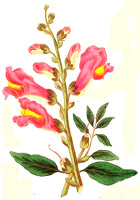
And it says: "Mischief is your middle name, but your first is friend. You are quite the prankster that loves to make other people laugh."
Now I'll have to take the quiz again and pretend to be other characters to see what other flowers people can "be."
Friday, May 26, 2006
Flaming Stick o' Death, or, How To Get Your Teenager To Help With the Weeding
 A few weeks back I ordered a Northern Tools 20,000 BTU Outdoor Torch from Amazon.com with the intention of using it mostly as a weed flamer. My teenage son's reaction was, "Mom! Are you kidding? You bought... a flame-thrower! That is SO cool!"
Nice to know that once in a while, I'm a cool mom.
The boy has been itching for its arrival, and finally it came. Since my son is in Scouts (and has earned his Eagle, no less), we naturally had a tank or two of propane in the house, and in moments he was happily scorching weeds on the concrete pad and down the sidewalk. "Can I borrow this for the next campout to start a campfire?" he asked. "It's the world's largest match!"
Naturally, a weed flamer can't be used on mulched areas, wooden decks, or any other flammable surfaces. Even on asphalt one should be cautious, since the tar can burn. In fact, we were taking our chances using it on the concrete pad where there's a lot of dying moss. But as a chemical-free solution for weeds growing through the concrete or in gravel areas, a weed flamer can't be beat.
Especially if it leads to a teenager asking if he can do the weeding. The Tom Sawyer method, pumped up a few degrees.

Saturday, April 01, 2006
A New Twist on Edible Landscaping -- With a Little Help From Science
 For people with small yards, edible landscaping is a great way to have your beautiful garden and eat it, too. Many traditional vegetables are lovely to look at. Tomatoes, in fact, used to be grown as an ornamental before people were quite ready to trust them as food. Bright Lights chard is stunning in the border, and a trimming of frilly green parsley can wake up a bed of flowers.
But for those who still want their roses, researchers at the Luther Burbank Institute have a new option: roses that produce large, juicy, delicious fruits. Rose Apples, as they're being called, may be available in garden centers as early as 2007.
It wasn't a giant leap. Roses already produce hips, which are in fact edible, though not tasty. Apples and pears are members of the rose family, as are cherries, peaches, and many other common fruits.
Dr. Avril d'Poisson of the Institute has led the team that developed the Rose Apple. "It all began when I was about twelve. I tried to graft apples scions onto a rose bush because I'd heard they were in the same family. It didn't work, of course, but the idea stayed with me."
After Dr. d'Poisson joined the Burbank Institute, she eventually found a way to make the graft work. "It took genetic engineering. I know that's a dirty word to a lot of people, but really, it wasn't that much of a genetic manipulation. Roses and apples are, as I knew at twelve, in the same family. All it took was moving the gene for one particular cell membrane protein in roses to an apple so that the rose would accept the apple wood as "self," then cutting scions from that apple and grafting them onto the rose. That project is still in the research phase because right now the rose canes aren't strong enough to support the apples. Cherries, being a smaller fruit, may be better suited for GE-assisted grafting."
The rose apple was a project that Dr. d'Poisson began two years after she joined the Institute in 1996. "I was still working on the grafting project and kept hitting barriers. But after reading several papers by some researchers in France who were developing roses with larger ornamental hips, I figured hey, what if those hips were edible and tasty, too?" She began her own work on investigating the specific genes that cause the ovary walls in apples to expand, grow fleshy, and produce fruit sugars. "It only took three key genes," she said. "As it turns out, there were already similar genes in the roses. We just enhanced the genetic information that was already there."
It took five years to create a rose that produced large, fleshy, and tasty fruits. Taste was a big criteria for Dr. d'Poisson, for she knew the rose would never meet with commercial success if the fruits were unappealing. The current Rose Apple yields large, bright red fruits that are somewhat pear-shaped. The flesh is slightly soft, with a texture more reminiscent of pears, but with a distinctly apple-like tang. It can be eaten straight from the bush, or cooked into sauces.
"We still need to do extensive safety testing before bringing this to market," Dr. d'Poisson said. "But I expect that we could have the Rose Apple out by sometime next fall, or perhaps the following spring."
She also reminds us that her name is a twist on Poisson d'Avril, the French way of saying, "April Fool!"
(The truth: The Rose Apple is a real fruit that grows in the tropics. It is not a product of genetic engineering. It is a member of the myrtle family.)
Subscribe to:
Posts (Atom)

