Showing posts with label book reviews. Show all posts

Thursday, September 11, 2008

Lettuce save...

These tiny dandelion tufts are seed heads of Specked Trout's Back lettuce. Can you tell that lettuce belongs to the Aster family, along with dandelions, thistles, and Bachelor's buttons?


And this is a cute little seed saving kit I got for Christmas:

That's where the Flashy Trout's Back lettuce seeds are going, along with Tom Thumb, a small butterhead lettuce that was sooo delicious when it was in its prime, and other seeds that I plan to save this year.

You don't really have to have a fancy seed saving kit to save seed. Paper coin envelopes from the office supply store -- or fashioned out of used paper -- will do just fine. But if this little kit strikes your fancy, it came from Territorial Seed Company.

Like sewing, knitting, spinning, canning, and growing your own food, there's something basic and satisfying about saving seed from year to year. It's not that we have to any more in these days of global marketing, malls, and shiny seed catalogs. It's knowing that we could if some sci-fi-novel-style disaster struck. Kind of like the Scout who earns a First Aid badge and secretly hopes there will be an accident just so said Scout can dash over and take charge with a confident, "I know what to do!"

With seed saving, there's also the satisfaction of preserving heirloom varieties of seeds that the big seed companies overlook. Maybe it's something that's been in the family for years, or maybe it's something you just ordered this year from a seed exchange. No matter. You're still taking part in an ancient ritual of saving for next year's harvest.

Learning to save seed, grow and preserve food, and manufacture clothing from the sheep or cotton plants on up also makes one a repository of basic survival skills that have kept humans alive for millennia. It is the anniversary of 9/11 after all, and at such a time people's minds sometimes turn to "what if?" scenarios. Too many of my college students think of "cooking" as taking something out of a box and microwaving it. Too few understand where their food comes from. Far too few know that onions have leaves, that potatoes grow in the earth, that someone must actually raise cows -- or that lettuce plants make flowers.

If you want to know more about seed saving, two good books to look for are:


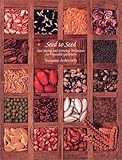
Seed to Seed: Seed Saving and Growing Techniques for Vegetable Gardeners by Suzanne Ashworth, Kent Whealy

This book contains very detailed information for people who are serious about saving seeds. It stresses the importance of population size for genetic diversity, and discusses techniques for preventing cross-pollination between varieties to keep the seed stock pure. It may be more than the casual home gardener wants to get into, but it's still a useful book, especially the sections on cleaning and storing seeds.


Saving Seeds: The Gardener's Guide to Growing and Storing Vegetable and Flower Seeds by Marc Rogers.

Less detailed than Seed to Seed, this is a good book for the beginning seed saver. Like Seed to Seed, its focus is mainly on food plants, but it does include some flowers as well.

Saturday, July 12, 2008

Review: Noah's Garden

Noah's Garden: Restoring the Ecology of Our Own Backyards by Sara Stein (Houghton Mifflin, 1993).

As interested as I am in gardening for wildlife you'd think I would have run across this a lot sooner. Noah's Garden is the narrative of the author's work to restore her 5 acre lot in upstate New York to something resembling native vegetation. It turns out that restoring a habitat involves a lot more than just planting some native species and calling it good. Habitats are interactive systems, and having the right native species for the area in the right numbers and the right combinations are all important.

Once the critical mass is reached, however, Stein herself discovered that if you plant the habitat, they will come. In this case, "they" consisted of plant species that she'd not planted herself, and she watched in amazement as a rare bit of endangered ecosystem self-assembled over the course of several seasons once she had the right woody plants in place.

Noah's Garden is not a scolding rebuke against "foreign" plants in the landscape, nor against any particular type of landscaping at all. Most of the book chronicles the author's personal discoveries on her own acreage and around a tiny vacation cottage. The author does go into why the typical suburban blandscape is so hostile to wildlife. Sprawling suburbs have, in fact, been enormously destructive, as native habitats are replaced by monocultures of lawn and a small selection of nonnative "easy care" shrubs and trees.

Can suburbs and native habitats co-exist? They can, according to Stein, if one is willing to be neither a pure nativist nor an intolerant lawn jockey. Pocket woodlands featuring native trees, berry-bearing hedgerows with native shrubs, wildlife-friendly ponds, backyard meadows created with native grasses and flowers (not the weedy "Meadow in a Can" products) can all contribute to a more varied, more naturalized landscape. Stein also suggests ways in which neighbors with adjoining back yards (or builders who create those adjoining yards in the first place) might cooperate to create islands and corridors of woods and shrubs that are more wildlife-friendly.

And what would be the benefits? Why bother with the work of re-creating habitat when we already know how to do the lawn-shrub-barkdust routine so well? Because the varied habitat can actually help us garden better. A healthy habitat supports birds and predatory insects that feast on garden pests and keep pests from overpopulating in the first place. Water features can harbor toads, a gardener's best friend. And let's face it, wildlife watching is just plain interesting.

When I travel to large cities, where the suburbs sprawl beyond the horizon, I'm often dismayed at the vast artificiality of it all, and at the prospect of anyone attempting to garden for wildlife in the midst of so much wildlife-hostile territory. One yard out of thousands with a hedgerow and a butterfly garden isn't going to restore a habitat. But if that one yard inspires one more yard... and that inspires one more yard... perhaps something wonderful might come of it. (Registering your backyard habitat with the National Wildlife Federation and putting up their official habitat sign is one way of educating and inspiring the neighbors.)

It's unfortunate that Sara Stein has passed away since this book was written. It is fortunate that the book lives on as a testimony to what one person with a little determination can accomplish for this earth.

Tuesday, June 10, 2008

How limited our tastes

Maybe I've just been reading too much Michael Pollan, but now as I look at the vast array of products in the supermarket, I see a whole lot of sameness. Two big grains, corn and wheat, in every product that contains flour (which counts for the majority of snack foods and processed foods), with a smattering of rice, rye, and barley. A half-dozen kinds of dry beans: "white," "kidney," "pinto," "black," "garbanzo," and sometimes, "black-eyed peas." Fruits? Apples, pears, oranges, peaches, nectarines, grapes, cherries, melons -- now we seem to be getting somewhere, as we add in the veggies: lettuce, carrots, celery, beets, turnips, chard, cabbage, broccoli, kale, brussels sprouts, cauliflower, peppers, squash, potatoes... and yet...and yet...

I've been reading a book I found at a used book store some time ago, Kitchen Gardening in America by David M. Tucker. It's out of print, alas, but it's not too hard to find used. I have a bit of a beef with the section where he describes most Native American practices as being based in "magic" (as though wise elder women couldn't figure out a more earthbound explanation of why ashes or fish made corn grow better), but otherwise it's an interesting history of gardening in America, looking at both Native American and European roots.

Native people who farmed, as many gardeners know, grew the plants that have come to be called the "three sisters": corn, squash, and beans. They also grew sunflowers for the seeds and Jerusalem artichokes for the nutritious tubers. These, with the addition of meat that the men brought in from the forest, formed the staples of the diet of many native groups. The staples, mind -- for while the women tended the fields throughout the year, they didn't have to work at it daily. They spent a good deal of their time in the forest, too, not hunting as the men did, but gathering forest and meadow plants. Nations of the eastern seaboard gathered something near two hundred different wild plants for food, including greens, roots, and berries.

Nearly two hundred. That makes the selection in the produce section look downright puny.

Turning to the European tradition, the same book lists a 17th century recipe for mutton stew that includes violet leaves, endive, succory (a relative of endive, it seems -- I had to look that one up), strawberry leaves, spinach, calendula flowers, green onions, and oatmeal. Lots of greens that we no longer consider food went into the pot, some simply for food value, some that were considered preventative medicine. The Medieval Garden by Sylvia Landsberg lists many more: dandelions, Alexanders, nettle, mallow, wood sorrel, betony, daisies, dead nettle, rockets, rampion... the list goes on and on.

Here I thought I was being wild and crazy when I ordered seeds for purple carrots and Flashy Trout's Back lettuce.

The advantage to eating a wider selection of foods is that so many foods have so many different pigments and other interesting substances that we lump under the generic heading of "phytonutrients": beta carotene, anthocyanins, lycopenes, lignins, various vitamins, and a whole lot more and even more yet to be discovered. The broader your range of foods, the more likely you'll take in the range of phytonutrients that will keep you in the best of health.

Those Medieval ladies who threw strawberry leaves and violets in the pot had something good going.

Good seed catalogs that carry heirloom vegetables often list lots of interesting, little-known vegetables not found at the supermarket. Not just different varieties, but entirely different vegetables from different gardening traditions. Next season I plan to delve into some of those, as well as look into cultivating patches of some of the native plants from my area that used to feed the people who lived here long before my ancestors came. With a degree in botany, I know enough to distinguish the edible from the poisonous. I already have Siberian Miner's Lettuce (Claytonia sibirica) in the yard. There's a start.

As for the camas (Camassia quamash) bulbs that the Kalapuya people in my area used to harvest -- doggone but the bulbs for sale in the catalogs are too expensive to eat. I'll just have to wait until my camas patch gets bigger.

Tuesday, April 29, 2008

Eating a species from the brink of extinction

In an article titled To Save a Species, Serve it for Dinner (free registration required to read), the New York Times reports on Gary Paul Nabhan's new book,titled Renewing America's Food Traditions: Saving and Savoring the Continent's Most Endangered Foods. Mr. Nabhan has compiled a list of over 1000 endangered American foods, comprising not only heirloom vegetables that gardeners are already keen on, but also American natives used by Native Americans and Europeans alike (pit-roasted antelope, anyone?).

The thing about preserving food species, as gardeners know, is that it isn't about protecting the species and its habitat as it is with preserving most wild species. It's about actually using the plants and animals as food. Heirloom vegetables will only stick around if someone grows them, eats them, and saves the seeds. Heirloom livestock will only exist if someone raises them and breeds them, and that will happen if there's a demand for the meat (or someone has a lot of money to spend on keeping livestock). Just keeping heirloom varieties around as a kind of living museum doesn't work, because unlike wild species, it takes a lot of work to keep them around. That Seneca hominy flint corn doesn't sow itself, ya know.

What's more, successfully preserving heirloom species also involves preserving the knowledge of how to use it. It's hard to get people to save Ny'pa (a kind of salt grass) if they have no idea what to do with it.

The good thing is that many gardeners and small farmers are keenly interested in heirlooms. Many have flavor or other qualities missing from mass-produced supermarket varieties. The tender skins of Brandywine tomatoes, for example, aren't good for shipping, but the winey flavor outshines any pale pink pseudo-tomato you can find in the produce section.

So where do you find heirloom varieties to grow? Some have made enough of a renaissance that they're available in a wide variety of seed catalogs. My two favorites, Territorial and Nichols, carry some, as does Pinetree Seeds. One Green World has a super selection of unusual fruit trees and shrubs. Then there's Heirloom Seeds, an online supplier which features varieties our parents or grandparents grew in victory gardens during the World Wars.

Not all heirlooms make it into the catalogs, though. To find really unusual varieties that haven't reached commercial production yet, turn to the seed exchanges like Seed Savers Exchange. Or ask around the neighborhood to see if gardeners in your area are harboring a local heirloom.

As for that salt grass -- you're on your own there.

Sunday, January 06, 2008

Review: Cultivating Delight

Cultivating Delight: A Natural History of My Garden, by Diane Ackerman (2001, HarperCollins)

Diane Ackerman, well known for her delight in the senses and the sensual, as told in her book A Natural History of the Senses, takes on the garden in this series of seasonal essays about delight, sex, squirrels, roses, Gertrude Jekyll, and more. Ackerman's essays ramble from topic to topic like a strolling observer wandering down a winding garden path. From picking beetles off of the roses in her New York state garden, to tagging Monarch butterflies in the eucalyptus groves of California, to grieving over the death of hatchlings in a toppled birdhouse, to pondering the mystical writing of John Muir, Ackerman details both the dramas and delights of nature and of the garden.

If I were asked what the book was about, I'd have to pause and give it a good deal of thought. I could be flippant and say, "It's about 260 pages long." The only running theme is a close observation of nature, followed by deep pondering. A single essay may start with cicadas, soar to William Blake's poetry, flutter like a butterfly through several herbs, and finally focus in on a female hummingbird and her young offspring visiting a feeder and a sphinx moth that resembles them. Yet when the author says, "Look here! Look at that!" one feels compelled to look and delights to wonder alongside her.

Perhaps it's really garden-themed poetry disguised as prose.

One phrase toward the middle of the book gave me pause. Not long after describing a laborious morning spent picking Japanese beetles off of her vast herds of roses, Ackerman relates why she doesn't grow vegetables: "I've never grown a vegetable garden. I envy those who do, but in my yard that would mean taking a number behind such a long line of vegetable lovers -- raccoons and squirrels and groundhogs, birds and insects -- and demand constant vigilance with little reward. Also, I only eat organic fruits and vegetables, and organic farming takes a lot of labor. I bless all the kind souls who devote their lives to it."

Oh, come now! Can home organic vegetable gardening be any more laborious than organic rose culture? And as for "little reward," surely the author has experienced the beauty of the French-style potager, or well-designed pattern gardens, both of which may take advantage of the natural beauty of vegetable plants and combine them freely with flowers -- which by itself is an organic measure for confusing pests. I wonder what she would think of garden beauties such as Flashy Trout's Back or Devil's Tongue lettuce, what she would make of Drunken Woman, Frizzy Headed lettuce and how it might have gotten its name? How about Purple Peacock or Veronica broccoli, Nero di Toscana kale, or the crimson-and-cream blossoms of the Painted Lady runner bean, as attractive to hummingbirds as to people? Tomatoes, when first introduced to Europe, were grown as ornamentals, and a mauve-tinted, green-shouldered Cherokee Purple, the dusky Purple Calabash, and the weirdly different Ananas Noir have all the colorful subtleties of many a garden flower.

Certainly there's nothing wrong with wanting a bower of roses instead of a vegetable patch, or of wanting a potager instead of a rose walk. But let's not pretend that one is "easier" than the other. We're only more willing to tolerate the dirty work if we're working for something we love.

The book concludes with a section of winter essays, full of the angst of a snowbound gardener waiting for spring, when the novelty of the first snow has long worn off and one longs for an end to the seemingly endless cold. At this point one might emulate the cycle of the seasons and cycle back to the first section, Spring. There is certainly plenty in this book that a second reading -- or a third or fourth -- still feels fresh and full of discoveries.

Saturday, December 29, 2007

Review: Plenty

Review of Plenty: One Man, One Woman, and a Raucous Year of Eating Locally by Alisa Smith & J.B. MacKinnon (Harmony Books, 2007)

This is where the whole 100 mile diet movement got off the ground. Aghast at the distances that supermarket food has to travel, and the waste of oil that goes into such insanities as shipping tomatoes from Ecuador to the U.S. at the same time that the U.S. is exporting tomatoes, Alisa Smith and J.B. MacKinnon made a rash vow: that for an entire year, they would eat only food that was grown or caught within a 100 mile radius of their home in Vancouver, B.C.

For a young couple living in a tiny efficiency apartment in the middle of a city, with only a 10 foot by 3 foot garden allotment a short drive away, unplugging from the industrial food system meant long drives in the country in search of food -- at times, any food at all. Their odyssey began in March, the time of year when most fresh foods are out of season and even the cold-storage root crops are beginning to show signs of their age. Potatoes and onions are fine for one meal, but as the authors soon discovered, a steady diet of little else can drive one mad. Fortunately the farmer's markets opened in May, bringing a steady stream of fresh produce for immediate eating and for preservation.

Throughout their culinary journey, the authors reexamine their relationship with food, and even with each other. They expose their mistakes as well as their successes, and draw colorful portraits of the farmers, fishermen, and other characters they met as they discovered just what eating locally means, and how removed we of Western culture have become from our own food.

The one hazard of this book is that it may leave readers with the feeling that this is all too hard. A rash of articles in the New York Times and the Washington Post have all insinuated that eating entirely locally just isn't practical, or is even impossible in today's global market, regardless of how wasteful and unsustainable the industrial food system has become. True, going cold turkey may be an excessive burden for most of us working stiffs who don't have time for tooling around the countryside week after week in search of direct-market farms.

But how hard does it really have to be?

Article writers approach the issue as though it's an either-or proposition: either we eat only locally or we just keep eating the way we are. Hmm, let me see, work very hard to eat locally, or just keep on doing what I'm already doing. Which would I choose? But those aren't our only options. The 100 Mile Diet website suggests starting small. The leap-in-with-both-feet approach is overwhelming, so why not stick a toe in first? Start with one meal, made entirely from local produce. Or one meal a week. Or some chosen percentage of the contents of your grocery cart.

Or start a garden and grow some of the food yourself, your rebel you. You can't get much more local than that.

There are no rules. If each of us does what we can, it will make a difference.

Sunday, October 07, 2007

Review: Naturalist by E. O. Wilson

Naturalist by Edward O. Wilson (Island Pess, 2006).

"Most children have a bug period," Wilson writes. "I never grew out of mine."

Pulitzer Prize-winning entomologist and naturalist Edward O. Wilson tells his life story in this lively autobiography, tracing his path from the small child poking in mud puddles, to becoming one of the world's experts on ant biology, to developing a new science of sociobiology and receiving several prestigious science and literary awards awards. His choice of insects as the subject of his live study, and especially ants, came about quite by accident: as a child, Wilson was fishing on a dock one day, and as he hauled in a type of fish called a pinfish, one of the spine on its aptly-named dorsal fin pierced his eye. The eye became inflamed, leaving him blind on that side. This left him able to study things he could bring close to his face. Insects filled the bill. Knowing that ants had been studied little, giving him scant competition in the field, Wilson devoted his live to the study of ants, racking up discovery after discovery, new species after new species, in some of the most remote places on earth.

Wilson's honesty and candor bring to life the world of science, from productive partnerships to ego-filled infighting in the halls of Harvard. His frank opinions of James Watson, co-discoverer of the structure of DNA, give a whole new insight into the story as Watson tells it in The Double Helix. Wilson rubs shoulders with many big names in science: George Gaylord Simpson, Ernst Mayr, Niko Tinbergen, Konrad Lorenz, and others, yet never loses his Southern small-town charm.

I had the pleasure of attending a talk that Wilson gave at the centennial celebration of Willamette University's Biology Department last month. The talk centered on biodiversity and the importance of preserving endangered habitats, and his involvement in the ambitious Encyclopedia of Life. Wilson gave a similar, though shorter, talk when he received the TED prize. See the video here. Happily, I got my copy of Naturalist autographed!

Tuesday, September 04, 2007

The Literary Gardener Calendar

It's here! For garden literature enthusiasts who need some inspiration for their own journals, here is the Literary Gardener Calendar for 2008.

This calendar features original photos from my garden, inspiring quotes from fine gardening literature, and journal prompts for each month to help when you out when the words run dry.

I'll keep a link to this calendar in the sidebar, as well as to the books quoted on each month's page -- naturally when you read the quotes, you'll want to read the books as well!

Thanks to the magic of Lulu.com, the calendar is available on demand and at a reasonable price until the end of February 2008. Delivery time is about a week after ordering, but allow more time during the holiday season, as the demand for calendars will be higher and the mail volume will increase.

Tuesday, August 22, 2006

Superfoods! Article 2: Beans

"The Army gets the gravy but the Navy gets the beans, beans, beans, beans..." goes the song, and indeed, beans have gotten a bad rap over the years as a cheap protein substitute. Long have beans been the food of the poor, and during the two World Wars, beans were promoted as a meat substitute for meatless meals during times of rationing.

But a mere substitute? Beans deserve a better reputation than something to fill up the kiddies while the meat-eating men march off to war. According to SuperFoods Rx (see SuperFoods! Article 1), beans are a low-fat source of protein, are full of fiber, and contain a good dose of B vitamins, iron, folic acid, potassium, magnesium, and a variety of plant pigments collectively known as "phytonutrients." The fiber in beans has been shown to lower cholesterol in people with cholesterol problems, so not only do beans "substitute" for meat, they also help control some of the problems associated with eating high-fat protein foods. Beans have been found to help stabilize blood sugar, so they may be useful for people with type II diabetes. Beans may also help reduce some cancers, particularly colon cancer. Of course, some people have a problem with -- er -- the "inflatable effects" of beans. People who eat beans frequently tend to produce the enzymes necessary for digesting them, and have fewer problems. For those who just can't eat beans without the musical after-effects, it's Beano to the rescue! This product, in liquid or tablet form, contains the enzymes that will solve the problem.
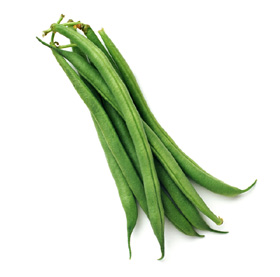
The superfoods "beans" group encompasses most legumes, including dried beans, lima beans, lentils, green beans, fava beans, and garden peas. Think of the variety of flavors, colors, and cooking methods!

True beans are summer crops, usually planted late in May and ripening late in the summer. Because beans are legumes, they form associations with nitrogen-fixing bacteria that create nodules on the roots of the plants; hence beans and their bacterial friends put nitrogen into the soil, and beans don't require much in the way of fertilizers. In fact, too much fertilizer will make beans run all to leaves and produce too few flowers and pods.

Most beans will need a trellis to climb on. The good old "bean teepee" is easy to make from bamboo poles. Tie a half-dozen or so poles about six or more feet long together at one end, and sink the opposite ends in the ground. Run string around and around them as you would string lights around a Christmas tree, winding the string around the poles themselves to anchor it. You can also run twine between two sturdy stakes, running it across the top and about six inches from the bottom, then run twine up and down vertically between the two horizontal strings. Or run deer netting or bird netting between two tall stakes. Either of these will provide support for a row. Keep the beans watered well for full growth.

Beans can be picked when green to steam, stir-fry, use in soups, or freeze. To freeze beans, trim the ends and cut into pieces, blanch in boiling water for three or four minutes, and cool immediately in ice water before putting in freezer-safe containers.

Bean pods can also be left on the plant to dry if you want to grow dry beans. While dry pintos, navy beans, and garbanzos are cheap to buy in the stores (and can, incidentally, be used as cheap seed source), more exotic, flavorful heirloom beans must be home-grown. Want a full list of heirloom bean varieties? Try The Bean Bag. The more colorful the beans, the higher levels of substances called polyphenols. These phytonutrients are important antioxidants. Dry beans are super in soups, can be served cold on salads, or used for bean dips. Try a traditional French cassoulet for a warm winter meal.

Fall and spring are the time to plant two other important members of the bean group: Fava beans and peas. Favas are much better known in Europe than in the U.S. These broad beans have skins with a slightly bitter flavor that some people love and others detest. The immature beans can harvested when they're thumb-nail sized. They can be simmered until tender, sauted lightly in butter, then seasoned with salt, fresh thyme, and a good vinegar for a full, rich flavor. The vinegar helps alleviate some of the bitterness. Favas are also great in soups.

Favas for planting are huge, and should be soaked before planting. Late in the summer, plant them in rich soil where you've pulled out summer crops. They'll enrich your potato patch. They're also a good follow-up crop to corn. The plants will get a head start in the warm days of late summer, grow very slowly in the winter, and produce a crop in the spring. They can also be planted as early in the spring as the soil can be worked.

Peas are a familiar garden favorite, and another member of the bean group. Peas are most often served as fresh, immature peas, lightly simmered. Traditional peas are harvested for their seeds, but snow peas are eaten as immature pods, and sugar peas are eaten at a more mature stage, pod, seeds, and all. This gives the gardener a lot more food for the effort. Still, there's nothing that can beat the taste of fresh petite pois peas, barely simmered, and seasoned with butter and a touch of dill.

My grandmother always said to plant peas on Washington's birthday. That may be a little early for those north of zone 8, but the idea is to plant peas as early as the soil can be worked. Peas benefit from the use of pea innoculants, which add those nitrogen-fixing root-nodule-making bacteria to the cold soil. Soak the peas, toss them with a light coating of the innoculant, then plant immediately, sinking the peas about two inches into the soil. Early planting helps prevent pea enation, a fungal disease that strikes in early summer. Spring-planted peas are usually ready in June. Many parts of the country can get a second crop of fall-planted peas as well.

With the wide variety of beans available, it shouldn't be too hard to get the recommended four 1/2 cup servings per week.

Superfoods! Article 1: The book

Have you seen SuperFoods Rx?

Dr. Steven Pratt and co-author Kathy Matthews teamed up in this book to present fourteen categories of food that have super health benefits. Now mind, you, I've been teaching science for, oh, quite a few years (longer than I care to admit), and I have a pretty critical stance when it comes to health claims. Most diet books that I've seen are worthless (all that talk of "detoxifying," claiming that it's toxins that make you fat, is bogus -- "detoxifying" teas are mostly diuretics, as are the "fat flushing" potions). But SuperFoods Rx impressed me. It has its share of hype -- it's hard to get a health book published and noticed these days without resorting to hype -- but most of the claims are backed by real research that appeared in real research journals, not vague claims of "some studies suggest..." or support from various unscientific testimonials.

All of the foods in the book contain more than the usual vitamins and minerals. Pratt goes into various anti-oxidant, anti-inflammatory, and otherwise health-enhancing substances in common foods, from the isoflavones in soy, to omega-3 oils in fish and leafy greens, to the colorful lutiens, xanthophyls, and anthocyanins in fruits and veggies. The best part is that you don't have to search the back shelves of esoteric health food shops to find these super foods. You can find them all at your grocery store -- or better still, most of them you can grow yourself to get the full benefits of fresh, organically-grown food!

So, as we move into fall harvest time, winter gardening time (for those of us in mild climates), and winter garden planning, I'll be running a series of articles on how to grow foods in most of the groups of superfoods. I'll skip over turkey (low-fat protein, high in three B vitamins, iron, selenium, and zinc, and supportive of the immune system), since I don't know anything about poultry-raising, and likewise I'll skip wild salmon (high in omega-3 fatty acids, B vitamins, and selenium, since it's not exactly something you can plant in your raised beds. As for the whole grains group, I'll discuss corn and a few other garden-appropriate grain foods, but leave the growing of oats, wheat, and rice to the farmers.

That still leaves plenty of superfoods you can grow in your garden or your kitchen, so we'll begin at the beginning of the book with the next article: Beans.

Sunday, June 04, 2006

Review: Garden Open Tomorrow

Review of Garden Open Tomorrow by Beverley Nichols (Copyright 1968; facsimile produced by Timber Press, 2002).

Garden Open Tomorrow, the sequel to Garden Open Today, is the last of Nichols' garden books, and carries with it the faint melancholy air of an author who knows this is, indeed, a "last" of anything. Nichols was no longer the springy young man who composed Down the Garden Path some thirty six years earlier. In 1968, he was 70 years old, and feeling the effects of age as he puttered about the garden of Sudbury cottage. Wind and winter are themes throughout, and Nichols gives advice on which plants to grow for winter blossoms, which will survive deep winter gales, and which plants to grow that will survive on windy heights. He also rails against the growing use of poisons in the garden, and narrates his own experiments with more earth-friendly forms of insect control.

By this time he was willing to admit, as he had not in earlier books, that most of the hard work was done by hired help. Indeed, in his chapter on gardening for the elderly, he advises hiring the heavy work done, and offers other tips for retirees who purchase a cottage in the English countryside, with the vision of turning a wilderness into a garden. Burning the ladder stands out most notably, since Nichols himself had an unfortunate habit of falling off of them. He also advises on plants that give excellent results with little care, particularly vines that will grow quickly but do not require trips up and down ladders to trim and care for them.

But all is not dark with thoughts of winter and death. There are cat ballets to enjoy, as the kittens Anthony and Trollop cavort in the heather, and an aged Five makes a cameo appearance to show them how it is done. There is an entire chapter on growing plants on alkaline soil, since chalk is the bane of many gardens in Britain. And there is a section on garden design, though Nichols' few forays into professional garden advice weren't always the sterling success one might imagine.

What is missing from this volume is the array of characters that sparkled across the pages of his earlier works. The mysterious Marius, whom we suspect of working for the secret service, drifts in and out a few times. Nichols' factotum, Gaskin, puts in a brief appearance, and the gardener, Page, is mentioned, though we know little about him. Page is not the Oldfield of the Merry Hall trilogy.

Instead, Garden Open Tomorrow is a more serious work, filled with gardening advice, as though the author wished he'd put more seriousness in his earlier garden books and so packed it all into his final gardening volume. Yet the humor that readers look forward to is still there, as well as Nichols' very decided opinions regarding plants and garden design.

For more on the author himself, see Beverley Nichols: A Life by Bryan Connon

Tuesday, May 30, 2006

Review: The Gardener

Review of The Gardener by Sara Stewart, illustrated by David Small (Farrar Straus Giroux, 1997). A Caldecott Honor book.

It's 1935, and Lydia Grace Finch is on the train, traveling from her grandparent's farmhouse in the country, to her Uncle Jim in the big city. The Great Depression has put Lydia's father out of work, but Uncle Jim can use some help in his bakery, and Lydia is just right for the job.

In a series of letters, first to her Uncle Jim, then to her family back home, Lydia narrates a story of her own inner strength that gives her the courage to travel alone, to a new home in a strange new place, yet never succumb to fear and doubt.

For Lydia is a gardener, and with her she carries a gardener's hope and packets of seeds. She tells her Uncle Jim that she knows a lot about gardening and nothing about baking, but she's anxious to learn about baking, and is there any place to plant seeds?

Uncle Jim never smiles, but he's no ogre, either, and Lydia fits right in. She's excited to find that there are window boxes on the bakery building and the rooms upstairs where they live, though the window boxes are empty.

Throughout the winter, Lydia works in the bakery learning the trade -- and works quietly on a secret that she's building with cracked teacups, bent cakepans, and dirt from a vacant lot down the street. Up the fire escape she discovers a secret place where she can carry out her plans, with the help of one of her uncle's assistants.

The comes spring, and Lydia's suprise blossoms -- literally -- in window boxes, half-barrels, and, best of all, in Lydia's surprise for her uncle.

The Gardener is a beautiful picture book for children, but you don't need kids in the house to enjoy its lovely illustrations and timeless message. Send a copy to any displaced gardener you know who is stuck in the city without a speck of dirt to dig, or keep a copy for yourself to cheer the gray winter months.

Saturday, May 13, 2006

Review: Down the Garden Path

Review of: Down the Garden Path by Beverley Nichols (facsimile by Timber Press, 2004)
"I bought my cottage by sending a wireless to Timbuctoo from the Mauretania, at midnight, with a fierce storm lashing the decks.

It sounds rather vulgar, but it is true."
Thus opens the first of Nichols' Allways trilogy books, Down the Garden Path, which tells the story of Nichols' attempts and triumphs in his first garden. As with all of Nichols' books on his gardens (including the Merry Hall trilogy and the Sudbrook Cottage tales beginning with Garden Open Today), the text bubbles along in a merry froth of gardener's enthusiasm bordering on mania, from superstitiously-laden rambles (where one cannot go straight at an interesting spot of color in the winter garden but rather stick to a prescribed path, lest one miss other interesting sights), to nearly fainting dead away at the sight of a particularly gorgeous flower. But given the writing style of the day (and Nichols' style does bring to mind every now and then), and his passion for life in general and gardening in particular, his excesses are forgiveable, while his rabid enthisasm lends vitality and character to the story rather than detracting from it.

This is the first of his gardening books, and Nichols was still a young writer at the time; hence the style is a trifle more affected and less developed than his later books, such as Garden Open Today. Yet the charm that infuses all of his garden books is in full evidence here.

In this story, Nichols purchases a cottage and acreage he dubs Allways, and proceeds to develop the badly-neglected garden, from planting a wood (and on his father's gruff advice, starting his own willows from cuttings rather than spending any more on buying trees) to placing a statue of Antinous. His desire for a pond and the resulting mound of dirt -- he'd quite forgotten that when one digs a pond, the dirt must go somewhere -- leads to an attempt at a rock garden, and with a great expense laid out on rocks, ends up with a disastrous lump that reminds him "of those puddings made of spongecake and custard which are studded with almonds." A deep sense of the aesthetic in decorating and flower arranging leads Nichols to own a good three cupboards' worth of vases and containers, and he even goes so far as to have part of a wall knocked out and niches installed so that he can put up frames over the niches with cream velvet stretched over them and insert flowers through the velvet and into vases behind, hence creating living paintings. Readers may not wish to go quite that far, but it's hard not to take pleasure in the ingenuity.

But the most charming aspect of the book is the people who pop up in Nichols' garden, many of them composites of friends and neighbors rather than actual individuals. There is gentle and angelic Ms. Hazlitt, his former nurse and teacher, who is one of the few women Nichols wholely respects. There is the overly-obvious Undine Wilkins, who drapes herself artistically over various benches and tree trunks, working hard to create an irresistible picture, all the while self-deprecatingly calling herself "such a toon moose" -- her unfortunate and highly-affected pronunciation of "town mouse" that leaves modern readers with a vision of in a floaty voile gown. There is the irritatingly efficient Mrs. M. and her definite garden opinions -- who is caught in the act of cheating in her own garden by deftly inserting potted plants. And there is the Professor, whose musings on life and the universe make one slightly dizzy.

Reading Down the Garden Path is rather like sitting down for a conversation with Nichols himself. He speaks directly to the reader, never overwhelming the reader with Latin, nor going on about soil types and amendments, but always entertaining and always either in rapture or despair over some event or other in the garden. Anyone who has ever gasped aloud at a fine plant specimen at the nursery or has broken out into a lurid string of curses over dead or damaged plants can understand and sympathize.

Thursday, May 04, 2006

The Shady Suburban Farmer

Summertime in the 'burbs: the smell of fresh-mown grass, a hammock in the cool shade of a spreading maple tree, a tall lemonade -- sounds great, doesn't it?

Unless, of course, you're trying to grow your own food. Cool shade trees are all well and good for relaxing and keeping off the summer sun, and they're a boon to the economically-minded and ecologically minded because they help keep the house cool, but alas, those ungrateful tomatoes insist on growing out in the blazing sun. If your yard is a shady delight, the veggies sulk miserably.

So what am I, homeowner with five big trees in the yard and with sunshine at a premium, supposed to do if I want a vegetable garden of more than a few square feet? Cut down all the trees? Sure, and roast in the summer, as well as drive all the birds away. Stick pots up on the roof? Believe me, I've been tempted. Find food crops that grow in the shade? Hah! As if --

But wait, turns out that's not so impossible after all. Turns out there's something called forest gardening, a type of permaculture where people grow perennial, shade-tolerant crops at the feet of useful trees, often fruit or nut trees. My crabapple, oaks, and Douglas-firs aren't exactly fruit or nut trees, but there may be something in this for me.

Books on forest gardening aren't easy to find, but I've rustled up a few. One is by Robert Hart. This is a good summary of the philosophy of forest gardening, and gives a nice list of North American resources. For practical "how-to" instructions, check out by Patrick Whitefield. And if you're way into the idea, there's , which is the second in a two-book series. The first book is on the theory of permaculture, and may be better suited for people who want to do this on a wide scale, or teach others how to do it.

So what's the picture of the scraggly little baby bush at the top there? That's one of a pair of new shrubs I recently installed in a semi-shady spot alongside the deck: honeyberry. It's a honeysuckle (Lonicera) that grows in part-shade and produces an edible blue berry. With berries touted as one of the super-duper and with more shade in my yard than I know what to do with, honeyberry made total sense. sells them in pairs (it's their pretty picture you see at the right), because they are not self-pollinating, and you need two varieties to cross-pollinate to produce fruit. One will grow about six or seven feet tall, and will fill in a space under the deck stairs. The other will grow lower and wider, and fill in the space where the yard slopes up under the deck. With honeyberry by the deck and with my blueberries interplanted with strawberries, I have my own little start toward a forest garden. Now if I can just get those tree trimmers to finally come out and trim up my ratty crabapple, maybe I'll have some new forest garden territory.

Friday, April 07, 2006

Great Gardens in Just 20 Minutes a Day

Review of The 20-Minute Gardener
Tom Christopher, Marty Asher (Random House, 1997)

If you can spare 20 minutes per day, on average, you can have a great garden and have a lot of fun with it, too.

Why 20 minutes? Because that, minus commercials, is the average time for a half-hour television program. If you can give that much time to just one program each night, you can spare that time for your garden. Give up some of your T.V. time and get outside.

But can you really do it all in 20 minutes?

That depends on how you define "all." Create a stunning replica of Sissinghurst, complete with clipped yew hedges? Not likely. Create a garden that suits your wants and your lifestyle? You betcha.

Christopher and Asher have the secrets to gardening with just 20 minutes per day. Their master plan begins with making your priorities and changing some of your methods to make your garden task list as short and simple as possible. Their quest is not for the perfect garden, but for a manageable garden, with weeds and pests kept in check by simple, ecologically-sound means. This leaves time for having fun in the garden: trying new plants, experimenting with new vegetables, or trying one of the 20-minute projects that are scattered throughout the book: build a kitchen windowbox so you can impress your friends by reaching out the kitchen window to snip fresh herbs, root "graveyard roses" to cultivate cheap and sturdy low-care rose bushes, construct the world's cheapest compost bin, grow an Egyptian water garden, and more.

Not that the two authors agree on all points. Christopher has a background in horticulture and landscape design, and has a distinct tendency to go overboard on his projects. Asher, by contrast, is extremely laid back about his garden, and his idea of a garden "task" would be to lie back in a hammock with a tall beer and supervise the grass as it grows. Between the two of them, with Christopher pushing Asher along, and Asher putting the brakes on Christopher's more outrageous notions, they find a middle ground that's just right for most busy homeowners. Along the way they infuse the book with their characteristic good humor that makes this book a delightful read.

Thursday, March 16, 2006

Of Tulips, Madness, and the Lord High Executioner

Review of: Tulipomania by Mike Dash, Three Rivers Press, 2001.

Dozens, if not hundreds, of Victorian moralists espoused gardening as a wholesome activity, good for both body and soul. Gardening should, they said, teach patience, perseverence, a love of work, an aesthetic sense, and a hundred other virtues. "Give me odorous at sunrise a garden of beautiful flowers where I can walk undisturbed," said Walt Whitman. Kipling extended the garden metaphor to the building of nations when he said, "Our England is a garden, and such gardens are not made / By singing: -"Oh, how beautiful!" and sitting in the shade."

Yet the story of the humble, chaste-looking tulip is a story filled with blood and greed, hardly Victiorian ideals. Mike Dash's tale begins in the harsh, mountainous regions of the Middle East, where small wild tulips dot the high slopes, splashes of late-winter brilliance in an otherwise unforgivably harsh world. Nomadic people of the region loved the flower, particularly the red varieties, as a symbol of hope, spring fertility, and a soldier's courage, as the star-shaped wild tulip was clothed in the scarlet of a warrior's jacket.

The tulip spread westward with these people as they conquered new lands. The tulip took on new meaning as a symbol of service to God, for the taller varieties hung their flowers in a most humble posture. As the Ottoman empire rose, and at a time when the Islamic custom of refraining from realistic portrayal of objects of nature was lifted, tulips were a favorite motif in deocoration, appearing on embroidered garments, tiles, in paintings, and more. Topkapi, the famous palace in Contstantinople, featured pleasure gardens for the eyes of the sultan alone if he so chose, and one of the most beloved flowers in the garden was the tulip. At that time, the favored form had an almond-shaped blossom and long, needle-like points at the tips of the petals that were as long as the blossom or more.

But all was not peace and tranquility in the sultan's gardens of pleasure. When a few cucumbers went missing from one of his vines, suspecting that one of the gardeners had eaten them, the sultan had the accused gardeners disembowled one at a time in his presence and their innards searched for tell-tale cucumber seeds. The head gardener himself, in a weird twist on later Victorian views of gardening virtue, doubled as the chief executioner. A man might escape the sentence of death if he could beat the gardener in a race to the city gates. But more often than not, the gardener was there waiting for him, sword in hand. Life was cheap in the Ottoman empire.

Some time in the 16th century -- records vary on just when -- Europeans viewed tulips in Constantinople, and brought some home. This is where the Dutch enter the story. Few people beyond a handful of explorers had ever seen a tulip, and the first Flemish merchant who received a gift of a few dozen bulbs with a shipment of carpets from the East mistook them for a variety of Turkish onions and ate them. He reported them delicious, though mildly bitter, and planted a few of the remaining bulbs in his garden. Only then did he discover that the bulbs produced beautiful flowers.

The flowers were popularized by botanist Carolus Clusius, who freely gave away bulbs of various wild tulips and cultivars that appeared in his gardens. He might have grown rich himself in the later craze, but preferred giving bulbs only to friends that he knew would appreciate the flowers for their beauty, not only for their monetary value. He had offers, of course, from his neighbors, grown wealthy following the new independence of the Netherlands. Many of his would-be customers, frustrated at Clusius' refusal to sell, took matters into their own hands and stole plants from his garden, and so the tulip spread across Holland and the rest of the Netherlands.

As tulips were cultivated in pocket-sized Dutch gardens, bringing species closer together than they were found in nature, hybrids and cultivars appeared in abundance. Among them were the famous "broken" tulips, those with white or yellow petals streaked with red, purple, or bronze. Those with the most delicate "breaking" grew to be the most highly valued, and gardeners, working in the days before even the rudiments of polliation were known, tried all sorts of nostrums to make their tulips "break." Only much later in the 20th century would it be shown that "broken" tulips were infected with a virus, hence the total unpredictability of the color patterns.

Holland and the rest of the Netherlands went mad for tulips, and the madness continued from 1637-1639. The very first true futures market opened with the sale of tulip bulbs, some of them changing hands for six times a carpenter's wages -- an astonishing sum for those of us who are miffed if we have to pay more than a dollar a bulb for tulips. Though tulipomania began among the wealthy, it soon spread to ordinary folks who staked their entire estates on a single bulb. A group of destitute orphans grew rich when they sold their fathers' tulip collections, while wealthy merchants lost everything in the topsy-turvy turbulence of tulipomania. Dash's Tulipomania tells the full tale of human folly and herd instinct when the markets are rising, a lesson one might think we'd have learned by now -- but as the recent dot-com internet bubble shows, is still a part of human nature.

Wednesday, March 01, 2006

As much fun as a barrel full of veggies!

Review of Bountiful Container by Rose Marie Nichols McGee and Maggie Stuckey, Workman Publishing, 2002.

Rose Marie Nichols McGee, current owner of the renowned Nichols Garden Nursery in Albany, Oregon, teamed up with garden writer Maggie Stuckey to write Bountiful Container, a definitive manual of container gardening. We're not just talking Shasta daisies and marigolds in a pot on the porch, either. These ladies are into gardening for food, and explain in full detail how to grow a bounty of edible stuff -- vegetables, fruits, herbs, and edible flowers -- in containers.

Why grow stuff in pots when you can grow them in the ground? Because not everyone who catches the gardeing bug has access to a plot of ground. Some are apartment dwellers stuck on the upper floors with only a tiny balcony, or just a window box, or even just a window to work with. Some live in planned communities or retirement homes and do not have the freedom to tuck a tomato plant into the earth. Some have mobility problems, and find it difficult or even impossible to navigate across bumpy ground.

And then there are the impatient sorts, who don't want to deal with soil-borne diseases, underground pests, and other problems that plague in-ground gardeners.

McGee and Stuckey spend time reviewing types of pots, going well beyond the traditional clay pot or wooden half-barrel. Grow salad greens in an old salad bowl? Why not? A kid-size container garden featuring violas growing in the back of a discarded toy dump truck? Sure! A hanging basket fashioned from a thrift-shop colander? How thrifty! When you've finished the chapter on containers, you'll find yourself looking around garage sales or the Dollar Store thinking, "Hmm, could this be a good planter? Could this? Or this?"

The chapter on soil discusses planting mixes, which, in spite of the common term "potting soil," don't contain any actual soil. Rather, potting mixes must carry out the dual and seemingly mutally exclusive roles of retaining moisture while allowing drainage, a feat they accomplish by mixing spongy, absorbant peat moss with light perlite or vermiculite.

Finally the section on the plants themselves gives dozens of ideas of edible plants to choose from, with a list of varieties that are especially suited for containers. Interspersed are ideas for theme gardens: a child's garden, a salsa garden, an ethnic foods garden, and more.

The one drawback to container gardening is keeping them watered. Plants in the ground can send roots down deep to find water reserves if they need to, and even shallow-rooted vegetables have their roots embedded in soil that is protected from the sun, but in containers, those roots can't go any further than the bottom of the pot. In hot weather, containers may have to be watered twice a day to keep the plants healthy. Some folks who plan to travel in the summer assemble a drip system on a timer to keep their containers watered without depending on some hapless neighbor to come and run the hose for them.

Even if you have an in-ground garden, you may want to try containers for their decorative effect, or for hard-to-grow veggies. I've successfully grown peppers, melons, and other crops requiring a long, hot summer in our mild Pacific Northwest summers in spite of the shorter season by putting them in containers and placing the containers in a warm spot. The peppers flourished alongside a blacktop driveway, while the melons sprawled all over a sun-baked deck. Sound like fun? Then try the Bountiful Container for complete instructions.

Monday, February 20, 2006

Roller coasters, tourists, and other hazards of gardening in Santa Cruz


Review of From the Ground Up by Amy Stewart (St. Martin's Griffith, 2002).

Every gardener's first garden is full of first-time miracles: the first time one sees bean seedlings elbowing their way up through the soil like rude children in a crowd; the first brilliant blossom of a cosmos grown from seed; the first taste of a tomato ripened in one's own patch of sun. Prosaic, everyday miracles, yet when a writer skillfully recalls them, the resonate with any garden addict.

Amy Stewart recalls her first garden in From the Ground Up which she scratches out of the hard earth around her rented bungalow in Santa Cruz. The garden looks down on the harbor and the amusement park, and the morning bird songs are accompanied by the rattle of the roller coaster. Her first attempts at poking plants in the ground (under the assumption that dirt is dirt, right?) meet with little success, but rather than give up as others have, rather than assume she's been cursed with a brown thumb, Stewart is determined to learn and succeed. She learns about compost; about scale and aphids; about "good" and "bad" bugs; about earthworm ranching and gopher repelling.

Through the course of a year, Stewart's intensive self-taught horticultural learning program takes her from "What happened to my poor plants?" to "What am I going to do with all these zucchini?" Along the way she introduces the reader to her two cats (the languid Gray and the zippy LeRoy), intrusive tourists (including a pair caught sunbathing on her front porch, unaware that people actually live in Santa Cruz), her gardening neighbors, her patient husband, and her wise great-grandmother.

Though it's not a garden how-to book, Stewart offers her own tips at the end of each chapter -- not that one can recreate a Santa Cruz bungalow garden without a Santa Cruz bungalow, but simply to pass some of her successes, or those of her gardening friends, on to her readers.

Sadly, all good things must end, and so does Stewart's time with her garden. She and her husband must move, and the garden must stay behind. With her, the reader says farewell to the geraniums, bougainvillea, and cosmos (adorned now and then by tourists' beer bottles), and hello to a new home and the promise of a new garden.

Monday, February 13, 2006

Of Cats, Chrysanthemums, and Georgian Follies


Review of Merry Hall by Beverley Nichols (Timber Press reissue, 1998)

Some fall in love with women; some fall in love with art; some fall in love with death.

I fall in love with gardens, which is much the same as falling in love with all three at once.

For a garden is a mistress, and gardening is a blend of all the arts, and if it is not the death of me, sooner or later, I shall be much surprised.


So opens Beverley Nichols marvelous Merry Hall, a classic in garden literature, reprinted by Timber Press. Merry Hall is one of the author's later gardening books, but written at the height of his writing career and at the height of his gardening style. It is the first book of a trilogy in which Nichols paints a humorous portrait of his years spent living in a Georgian manor, restoring it and its surrounding gardens to Georgian splendor.

As with any work of fiction, and Merry Hall, while based in fact, is a fictionalized tale, it is the characters who make the story. Nichols, as the narrator and protagonist, is effusive, energetic, opinionated, and open-hearted. His majordomo, Gaskin, looks after the house and Nichols himself. There is Oldfield, the gardener, who keeps the lilies and "t'chrysanthemums" in bloom, happily if allowed his own methods, grudgingly when forced to use innovative ideas -- and smugly, when the innovations fail. There are the indomitable Miss Emily and Our Rose, and their machinations in the floral shows. There is the mysterious Marius, who, it is hinted, might belong to the Secret Service.

And there are, of course, the cats named One, Two, Three, and Four. Alas, Two and Three succumbed to illness early on, in spite of intense nursing and penicillin injections from Gaskin. But One and Four live on.

If the descriptions of Nichols' life in Merry Hall are to be believed, one may get the impression that his life was one long lark, dashing from one social event to another, where most disasters were horticultural ones. While Nichols was highly social and an extraordinary novelist and garden writer, what is deliberately missing from this account is the darker side of Nichols' life, better described in his biography, Beverley Nichols: A Life by Bryan Connon. Nichols hungered for the life of a serious writer, but though he tackled many social issues of his day in his novels and columns, his fame wrapped around his garden writings, as it still does today. Bitter over what he viewed as a failed career, and increasingly resentful of his autocratic father, Nichols later penned his savage autobiographical novel, Father Figure -- which, like Merry Hall, was a work partially of fiction. In it Nichols portrayed his father as a ruthless brute, and described his own attempts at patricide in all the lurid detail of a confession magazine.

The contrast between the gothic darkness of Father Figure and the sparkling champagne wit of Nichols' garden books, including the Merry Hall trilogy (Merry Hall, Laughter on the Stairs, and Sunlight on the Lawn) only highlights the deep complexities of an extremely talented writer. Though Nichols may have been disappointed that readers favored his garden fare, gardeners themselves may rejoice that his best-loved works have survived.

And perhaps he needn't have been disappointed after all. Under the gleam of humor lie Nichols' strongest feelings about racism, religion, and world issues, within parables of gardens and floral shows, which makes them all the easier to slip past the reader and gently awaken one to the greater lessons that lie in the garden, and beyond.