
From the Associated Press: Front Yard Veggies Improve Diets, Homes
This upbeat title was replaced in our local newspaper with the slightly more ominous, "Front-yard vegetables fill tables, but rile neighbors."
Used to be, in the U.S. suburbs, in the days of big front porches and convenient back alleys, that the front of the house was for show and socializing, while the back of the house was for service. That's why the kitchen garden was stuck in the back -- rows of vegetables weren't pretty, no more than rows of laundry hanging out.
Then came the post-WWII suburbs and the ranch house, with the loss of alleys for garages, garbage, and delivery. The front became the service entrance, and people moved their living spaces to the back.
Where did the vegetable garden go to? Into oblivion. Just before the turn of the century, about 30% of food was produced at home. By the post-war years, less than 10% was produced at home as people ripped out old-fashioned victory gardens and replaced them with landscaping and in-ground swimming pools. And the number continues to decline. Today less than 3% of food is in the U.S. is produced at home. (See Kitchen Gardeners International: What is KGI? for statistics -- of course, some of the perceived decline may be due to the enormous increase in agribusiness production during the 1950's.)
Now, rising gas prices and the subsequent rise in consumer prices, plus an increasing awareness of global issues and a desire to "live green" has aroused a new interest in gardening. But with urban and suburban land at a premium, and houses in modern 'burbs sit in postage-stamp-sized lots (which is nothing new -- houses in this town built during the 30's were also on tiny lots). Where do you put a veggie garden? Some folks solve the problem by ripping out the lawn, whether it is in the front or the back of the house.
But if you live in a neighborhood where covenants or municipal codes govern what you can do with your front yard, and front-yard farmers risk running afoul of the law. When people think of "vegetable gardens," they think of the old-fashioned American kitchen garden with rows of corn and peas in the summer and bare dirt all winter, not something they want to look at as they drive through suburbia. Or around here they think of little hippie houses with a mad tangle of half-neglected herbs, some of them legal.
Yet with a little inspiration from the French potagers and from the "edible landscaping" concept, people are designing beautiful front gardens with herbs, salad greens, berry bushes, and other food plants that are as nice to look at as they are to eat. What would look nicer: a French-inspired kitchen garden with neat paths, patterned beds, trained fruit trees, and clipped herbs, or a dead brown lawn? (Okay, dead brown in the winter for you folks back east, dry and brown in the summer for us folks out west.) What some front-yard gardeners are finding is that while their gardens may cause raised eyebrows, they also bring the neighbors over to talk, often for the first time.
I know my house, and some houses around here, have shrubs in front instead of lawn. I've been sneaking chard, tomatoes, and other edibles in the front landscaping for years, and this year I'm determined to take out the increasingly ugly concrete pad that the former owners used as a basketball court and replace it with raised beds. We'll see what the neighbors have to say about that!
Thursday, July 26, 2007


Sunday, July 22, 2007
This weekend's project: flagstone paths
 A yard of sand, a pile of salvaged flagstones, a sorta cool (though humid) weekend, et voila! -- my new flagstone paths.
Okay, so it wasn't quite that easy, as my aching shoulders will attest.
The stones originally came from my grandmother's house, and where she got them from, I don't know. My mom had them for years, and when she sold the old homestead last summer, I hauled as many as I could find home intending to use them.
This summer, I decided, I'd have me some stone paths. I ordered sand last week, and spent this weekend excavating the woodchipped paths. The old woodchips went in another part of the yard, and I dug out a few inches of dirt all along the path (the dirt pile is just visible by the fence). I filled in the excavated paths with sand, and sank the stones into the sand. Some are still a bit wobbly, so I'll keep working on individual stones to make them more stable. There was enough stone to do about 10 feet on the other side of the sidewalk, this 25 foot path, and the 15 food fork off to the left, plus a few large stones for stepping stones and some smaller ones to pile up at the base of the pole that holds up the bird feeder. The smaller stones lining the path are ones I've been digging out of the yard ever since we moved in here about 10 years ago. I need a few more to finish the edging of all the paths, so I'll have to look around and see where I can find some.
Next project: That horrid concrete pad in front of the house that the former owners put in as a basketball court, and is now cracked, mossy, and ugly, is going to go. In its place will be a raised bed potager. Alas, the old "hobbit tree" of a crabapple has died and I'll have to take it out later -- I'm leaving it in until fall, since the Lincoln Constance rose that's been scrambing up it still casts some shade on the house. Once that's out, I'll be putting in some fruit trees in front.
The renovations never end, do they? But then that's what gardening is all about. What fun would it be if you got to the point where you said, "I'm done" and had to stop?
Friday, July 20, 2007
Friends of Bush Gardens Plant Sale

If you're in or near Salem, Oregon, and are planning on visiting the Salem Art Fair this weekend, don't miss the Friends of Bush Gardens plant sale. I put in a 3 hour shift this afternoon in the plant holding area, and saw lots of gorgeous plants going off to new homes. There were hummingbirds visiting the crocosmias, which I'm sure the amazing Gretchen Carnaby ordered just for demonstration purposes.
The Bush Gardens surround the historic Asahel Bush House Museum. Of course you won't want to miss the gardens themselves, and the historic greenhouse. House tours are going on all during the fair. The Bush House was home to Asahel Bush, who founded the Ladd and Bush Bank (the original building is now a branch of U.S. Bank). In 1953, the Bush family donated the house and land to the City of Salem, along with much of the original furnishings, making it unique among the historic houses of Salem.
Among the offerings at the plant sale are heritage roses grown from cuttings taken from Miss Sally's rose garden. I also spotted lots of fantastic herbs, rock garden plants, lovely foliage plants, huge hanging baskets -- and of course came home with a few goodies myself!
The sale has a holding area for people who want to buy plants and park them while they look at the rest of the art fair. I spent my shift trotting plants out on a cart as people pulled their cars up to pick up their plants. If you're in the area, come on down!
Friday, June 15, 2007
Kittens: The Sequel
It's been over a year since our third kitty, Wild Bill, was born to a feral mother in our backyard. Now we've got a whole new kitten adventure going on. Another feral, whom we dubbed Toast for her black-and-brown tortoiseshell coloration started turning up in the spring. I tried to catch her a couple of times to get her fixed, but one or more tomcats got to her first, and she turned up pregnant:

I kept feeding her, hoping she'd stick around, and she did. Four week ago, she turned up looking disheveled, a little dazed, and a whole lot thinner. After a bit of searching, I found her nest in the backyard with four tiny babies in it.
They're toddlers now, and though she's moved the nest once (urk -- I got a little too nosy with the camera), she's still in the back yard. I'll keep luring her with food and toys, and see if I can get the little ones to play as they get bigger. My hope is to tame them so that they can be housecats. At the very least, get them fixed and keep caring for them. My fear is that if I let them live here with their mama, someone is going to start saying, "What's with all these cats?" and call in animal control -- or worse yet, the known cat poisoner who lives somewhere down the block will start leaving out tuna-and-antifreeze cocktails again. So taming them and finding homes for them would be ideal.
Before Toast moved the nest, I got this shot of the babies when they were three weeks old:

The grayface tortie in the front is Gizmo. Immediately behind him is a darker tortie, Gadget. The calico behind them is Sprocket. And the shy black-and-white to the right is Edison.

I kept feeding her, hoping she'd stick around, and she did. Four week ago, she turned up looking disheveled, a little dazed, and a whole lot thinner. After a bit of searching, I found her nest in the backyard with four tiny babies in it.
They're toddlers now, and though she's moved the nest once (urk -- I got a little too nosy with the camera), she's still in the back yard. I'll keep luring her with food and toys, and see if I can get the little ones to play as they get bigger. My hope is to tame them so that they can be housecats. At the very least, get them fixed and keep caring for them. My fear is that if I let them live here with their mama, someone is going to start saying, "What's with all these cats?" and call in animal control -- or worse yet, the known cat poisoner who lives somewhere down the block will start leaving out tuna-and-antifreeze cocktails again. So taming them and finding homes for them would be ideal.
Before Toast moved the nest, I got this shot of the babies when they were three weeks old:

The grayface tortie in the front is Gizmo. Immediately behind him is a darker tortie, Gadget. The calico behind them is Sprocket. And the shy black-and-white to the right is Edison.
Wednesday, January 17, 2007
The garden -- such as it is -- in January
Last week we had snow. This week we got an unexpected blast of arctic air that the weather gurus thought would bring snow, but brought freezing rain ahead of it in the wee hours of the morning, then snow on top. Traffic has been a mess, schools have been closed, and while the main roads were clear today, getting out of our own neighborhood was the most hazardous part of my drive in to work today. I waited until things thawed out a bit this morning before I ventured out onto the roads. The cats were whining for a walk yesterday, but sleet and snow don't make good kitty walking conditions. This morning I took them out on their harnesses, and got some garden pictures while I was at it. Amazing. Even in January, it's possible to find some garden eye candy.
Remember Wild Bill from last summer? (Feral Kitten Update and Wild Bill is in the House) He's become a sweet-natured house kitty, a bit of a clown, and even at seven months, still kittenish cute. He sometimes still cringes when we try to pet him, as though he expects to be attacked, but more and more often he rolls over to show, "I'm not really afraid." He's also learned that sitting and looking cutely at me when I'm on the couch sometimes gets him a kitty treat. Alas, his mama that we were caring for disappeared just before Thanksgiving. We think she may have been a victim of a suspected cat poisoner in the neighborhood. Yet another reason we keep our kitties indoors and only take them out on a leash.
Here's Wild Bill, looking up from his busy sniffing, with an expression of, "What's that crazy lady pointing at me now?"

A few pieces of old slate stacked up make a nice platform feeder for ground-feeding birds. Here an Oregon Junco searches for birdseed in the snow.

My little birdbath, made of three clay pots and a clay saucer fastened together with silicon glue (ten minute crafts -- something I can actually finish), and full of ice. Keeping water out for the birds in this weather is a real trick. I try to pour some hot water into the pans in the morning to thaw out the ice from the night before. At the base of the birdbath you can see some disks of ice that came out of the birdbath on the prior days that still haven't thawed.

Snow-glazed Daphne leaves, with the buds turning pink already. We should have some fragrant Daphne soon.

Brilliant Cotoneaster berries, dusted with snow, brighten the winter landscape considerably. The robins have been munching on them, too.

Our house has a garage in the back, and the access drive was still covered in snow. There was a neat line of raccoon tracks leading from the wooded lot behind the houses across the street, down our drive, and into the neighbor's yard.
 Brrr, I hope we thaw out soon. I still have garden chores to do that I was supposed to do in the fall!
Remember Wild Bill from last summer? (Feral Kitten Update and Wild Bill is in the House) He's become a sweet-natured house kitty, a bit of a clown, and even at seven months, still kittenish cute. He sometimes still cringes when we try to pet him, as though he expects to be attacked, but more and more often he rolls over to show, "I'm not really afraid." He's also learned that sitting and looking cutely at me when I'm on the couch sometimes gets him a kitty treat. Alas, his mama that we were caring for disappeared just before Thanksgiving. We think she may have been a victim of a suspected cat poisoner in the neighborhood. Yet another reason we keep our kitties indoors and only take them out on a leash.
Here's Wild Bill, looking up from his busy sniffing, with an expression of, "What's that crazy lady pointing at me now?"

A few pieces of old slate stacked up make a nice platform feeder for ground-feeding birds. Here an Oregon Junco searches for birdseed in the snow.

My little birdbath, made of three clay pots and a clay saucer fastened together with silicon glue (ten minute crafts -- something I can actually finish), and full of ice. Keeping water out for the birds in this weather is a real trick. I try to pour some hot water into the pans in the morning to thaw out the ice from the night before. At the base of the birdbath you can see some disks of ice that came out of the birdbath on the prior days that still haven't thawed.

Snow-glazed Daphne leaves, with the buds turning pink already. We should have some fragrant Daphne soon.

Brilliant Cotoneaster berries, dusted with snow, brighten the winter landscape considerably. The robins have been munching on them, too.

Our house has a garage in the back, and the access drive was still covered in snow. There was a neat line of raccoon tracks leading from the wooded lot behind the houses across the street, down our drive, and into the neighbor's yard.
 Brrr, I hope we thaw out soon. I still have garden chores to do that I was supposed to do in the fall!
Tuesday, January 16, 2007
Hummingbird in the snow
I finally caught our little Rufous hummingbird on film, but it took the video camera to do it. It's backlit, so you can't see the few sparkling orange feathers on his throat that are his winter plumage (in summer his whole throat is metalic orange), but you can see he's still active in spite of today's freezing rain and snow. The little chirps you hear are not the bird; it's Belle, my little kitty, who spotted the hummingbird and wants to go play with it.

If that doesn't show, click on Hummingbird in the Snow Movie. Plays with Quicktime.
If that doesn't show, click on Hummingbird in the Snow Movie. Plays with Quicktime.
Monday, January 15, 2007
First flowers of 2007

As I was outside filling the bird feeders, I spotted these little gems popping up. Snowdrops in the frost, first flowers of the year, carrying a promise of spring to come.
Not your usual winter feeder bird
Last October I was out in the garden and heard a familiar hummmm and a squik squik! A hummingbird? In October? Sure enough, there was a fat little Rufous hummingbird still hovering around, going for the last of the hardy fuchsias. I'd long since taken in the hummingbird feeders, so I told him to go south with the rest of the hummers.
I guess he didn't listen to me.
Later in December, I heard the same sound again. And sure enough, there he was -- no, this time two of them, zipping around the garden, searching for something to eat.
I've heard that one shouldn't leave hummingbird feeders out late into the fall, because hummers need to go south while there's still food on the way, and that leaving feeders out encourages them to stay when they shouldn't. I've also heard that they know to go south by day length, not by food availability. And I've heard that in some areas, hummers are hanging about all winter instead of going to Mexico like they should. Whatever the reason, we still have hummers gadding about the garden.
I put the feeder out for them again, but with the cold snap we've been having in the west, it's been freezing solid at night. Then I hit on the idea of hanging the feeder by the flood light on the back deck. The heat from the lamp keeps the feeder from freezing, so there's food available first thing in the morning. For all I know, they may be sipping at night, since the feeder is lighted for them.
Here's a shot of one of the little guys resting in the Douglas-fir tree. Look closely and you can see him. I'm trying to get a picture of one at the feeder, but it's tricky, and my camera keeps focusing on the trees in the background instead of the bird in the foreground.

I guess he didn't listen to me.
Later in December, I heard the same sound again. And sure enough, there he was -- no, this time two of them, zipping around the garden, searching for something to eat.
I've heard that one shouldn't leave hummingbird feeders out late into the fall, because hummers need to go south while there's still food on the way, and that leaving feeders out encourages them to stay when they shouldn't. I've also heard that they know to go south by day length, not by food availability. And I've heard that in some areas, hummers are hanging about all winter instead of going to Mexico like they should. Whatever the reason, we still have hummers gadding about the garden.
I put the feeder out for them again, but with the cold snap we've been having in the west, it's been freezing solid at night. Then I hit on the idea of hanging the feeder by the flood light on the back deck. The heat from the lamp keeps the feeder from freezing, so there's food available first thing in the morning. For all I know, they may be sipping at night, since the feeder is lighted for them.
Here's a shot of one of the little guys resting in the Douglas-fir tree. Look closely and you can see him. I'm trying to get a picture of one at the feeder, but it's tricky, and my camera keeps focusing on the trees in the background instead of the bird in the foreground.

Sunday, January 14, 2007
The Winter Wildlife Show
All it takes is a handful of peanuts to start the show.
First the crows hear the familiar sound of peanuts rattling on the frozen pavement, and they start calling, "Food! Food! Mine! Mine!"
Then come the scrub jays, to claim their share:

Western Gray Squirrels, of course, come running for the handouts, and start swarming all over the squirrel feeder:

A couple of shy Steller's Jays, not very common at our low altitude, joined in this morning:

And as always, the show plays to a fully appreciative audience:

First the crows hear the familiar sound of peanuts rattling on the frozen pavement, and they start calling, "Food! Food! Mine! Mine!"
Then come the scrub jays, to claim their share:

Western Gray Squirrels, of course, come running for the handouts, and start swarming all over the squirrel feeder:
A couple of shy Steller's Jays, not very common at our low altitude, joined in this morning:
And as always, the show plays to a fully appreciative audience:
Sunday, December 10, 2006
Christmas giving that keeps on giving
Christmas is fast approaching and I know lots of busy people are looking for that perfect last-minute gift or Secret Santa present.
How about a gift that's something more than just another fancy soap, box of candy, or plastic whatnot? How about a gift that really means something?
My favorite gifts for my online friends the last couple of years have been a Gift of Trees, a Share in a Knitting Basket, or a Flock of Ducks, given to a family in poverty in the name of the recipient through Heifer International.
The cool thing about Heifer is that part of the deal of receiving animals through them is that the recipients have to pass the gift along to another needy family. A Heifer gift is truly a gift that keeps on giving!
How about a gift that's something more than just another fancy soap, box of candy, or plastic whatnot? How about a gift that really means something?
My favorite gifts for my online friends the last couple of years have been a Gift of Trees, a Share in a Knitting Basket, or a Flock of Ducks, given to a family in poverty in the name of the recipient through Heifer International.
The cool thing about Heifer is that part of the deal of receiving animals through them is that the recipients have to pass the gift along to another needy family. A Heifer gift is truly a gift that keeps on giving!
I'm baaack...
This unannounced hiatus was due to getting totally busy writing my dissertation and taking up a new job, as well as all the paperwork involved in taking a new job, being a grad student, etc. etc.
It's finally Christmas break, the dissertation is this close to being finished, and I have some time to myself once again.
Of course in all this busy-ness, the garden has been neglected. There are still leaves to rake and shrubs to trim, weeds to pull -- and it's raining, raining, raining. Bleah.
It's finally Christmas break, the dissertation is this close to being finished, and I have some time to myself once again.
Of course in all this busy-ness, the garden has been neglected. There are still leaves to rake and shrubs to trim, weeds to pull -- and it's raining, raining, raining. Bleah.
Tuesday, August 29, 2006
The garden in August
It's the middle of the dry season, and everything is burning up in the summer's heat. I'm cheating in these pictures. They only show the pretty details, and leave out the brown lawn and the crispy perennials that need trimmed. Kind of like I do as I walk through the garden: try to look only at the pretty bits.
Here, Rudbeckia makes a brave show, being one of the few flowers to thrive in the summer's heat, given a bit of water.

A single hollyhock, Creme de Cassis , blooms against the blue sky. Amazingly, it escaped the usual rust invasion this year, though the bugs made lacework of the leaves.

A lone Dianthus just coming into bloom, poking out of the weeds and the dry ground. Yes, I need to water, but we're supposed to be conserving around here, and the water bills can get outrageous this time of year.

Out of a ruin of dried leaves at the base of a sword fern, a cluster of cyclamen emerge.

Chelone (turtleheads) blossom against a bright sky. These normally like boggy ground, so they need an extra hit from the hose now and then.

In the back yard, a variegated butterfly bush is still blooming away.

The asparagus we ate last spring is now a small forest, with the peach tree peeking up from behind:

Rejoice! My very first home-grown cauliflower! This variety, "Cheddar," has the added benefit of being packed full of carotenes. I cut this, steamed it just until tender, and served it up with just a bit of butter. It was amazingly sweet and flavorful. As the nutritional scientists now say, eat colorful food!

The red raspberries are late this year, but they're worth the wait:

The golden raspberries put on a crop earlier, but they're back for another show:

Here, Rudbeckia makes a brave show, being one of the few flowers to thrive in the summer's heat, given a bit of water.

A single hollyhock, Creme de Cassis , blooms against the blue sky. Amazingly, it escaped the usual rust invasion this year, though the bugs made lacework of the leaves.

A lone Dianthus just coming into bloom, poking out of the weeds and the dry ground. Yes, I need to water, but we're supposed to be conserving around here, and the water bills can get outrageous this time of year.

Out of a ruin of dried leaves at the base of a sword fern, a cluster of cyclamen emerge.

Chelone (turtleheads) blossom against a bright sky. These normally like boggy ground, so they need an extra hit from the hose now and then.

In the back yard, a variegated butterfly bush is still blooming away.

The asparagus we ate last spring is now a small forest, with the peach tree peeking up from behind:

Rejoice! My very first home-grown cauliflower! This variety, "Cheddar," has the added benefit of being packed full of carotenes. I cut this, steamed it just until tender, and served it up with just a bit of butter. It was amazingly sweet and flavorful. As the nutritional scientists now say, eat colorful food!

The red raspberries are late this year, but they're worth the wait:

The golden raspberries put on a crop earlier, but they're back for another show:

Tuesday, August 22, 2006
Featured on Blogger!
Wow! I'd been away from the blogs for a while, dealing with family and personal business, and while I'm away the stat counter shot up, with hit after hit from the Blogger home page!
I'm thrilled! I'm honored!
And you're all welcome guests. Please come in, pull up a chair, browse around for a good book, or just enjoy the pretty pictures.
Here are a few popular posts from the past that you might enjoy:
I'm thrilled! I'm honored!
And you're all welcome guests. Please come in, pull up a chair, browse around for a good book, or just enjoy the pretty pictures.
Here are a few popular posts from the past that you might enjoy:
Superfoods! Article 2: Beans
 "The Army gets the gravy but the Navy gets the beans, beans, beans, beans..." goes the song, and indeed, beans have gotten a bad rap over the years as a cheap protein substitute. Long have beans been the food of the poor, and during the two World Wars, beans were promoted as a meat substitute for meatless meals during times of rationing.
But a mere substitute? Beans deserve a better reputation than something to fill up the kiddies while the meat-eating men march off to war. According to SuperFoods Rx (see SuperFoods! Article 1), beans are a low-fat source of protein, are full of fiber, and contain a good dose of B vitamins, iron, folic acid, potassium, magnesium, and a variety of plant pigments collectively known as "phytonutrients." The fiber in beans has been shown to lower cholesterol in people with cholesterol problems, so not only do beans "substitute" for meat, they also help control some of the problems associated with eating high-fat protein foods. Beans have been found to help stabilize blood sugar, so they may be useful for people with type II diabetes. Beans may also help reduce some cancers, particularly colon cancer. Of course, some people have a problem with -- er -- the "inflatable effects" of beans. People who eat beans frequently tend to produce the enzymes necessary for digesting them, and have fewer problems. For those who just can't eat beans without the musical after-effects, it's Beano to the rescue! This product, in liquid or tablet form, contains the enzymes that will solve the problem.
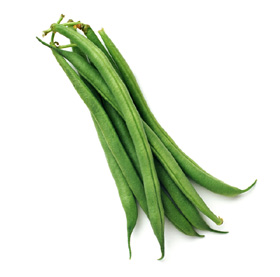 The superfoods "beans" group encompasses most legumes, including dried beans, lima beans, lentils, green beans, fava beans, and garden peas. Think of the variety of flavors, colors, and cooking methods!
True beans are summer crops, usually planted late in May and ripening late in the summer. Because beans are legumes, they form associations with nitrogen-fixing bacteria that create nodules on the roots of the plants; hence beans and their bacterial friends put nitrogen into the soil, and beans don't require much in the way of fertilizers. In fact, too much fertilizer will make beans run all to leaves and produce too few flowers and pods.
Most beans will need a trellis to climb on. The good old "bean teepee" is easy to make from bamboo poles. Tie a half-dozen or so poles about six or more feet long together at one end, and sink the opposite ends in the ground. Run string around and around them as you would string lights around a Christmas tree, winding the string around the poles themselves to anchor it. You can also run twine between two sturdy stakes, running it across the top and about six inches from the bottom, then run twine up and down vertically between the two horizontal strings. Or run deer netting or bird netting between two tall stakes. Either of these will provide support for a row. Keep the beans watered well for full growth.
 Beans can be picked when green to steam, stir-fry, use in soups, or freeze. To freeze beans, trim the ends and cut into pieces, blanch in boiling water for three or four minutes, and cool immediately in ice water before putting in freezer-safe containers.
Bean pods can also be left on the plant to dry if you want to grow dry beans. While dry pintos, navy beans, and garbanzos are cheap to buy in the stores (and can, incidentally, be used as cheap seed source), more exotic, flavorful heirloom beans must be home-grown. Want a full list of heirloom bean varieties? Try The Bean Bag. The more colorful the beans, the higher levels of substances called polyphenols. These phytonutrients are important antioxidants. Dry beans are super in soups, can be served cold on salads, or used for bean dips. Try a traditional French cassoulet for a warm winter meal.
 Fall and spring are the time to plant two other important members of the bean group: Fava beans and peas. Favas are much better known in Europe than in the U.S. These broad beans have skins with a slightly bitter flavor that some people love and others detest. The immature beans can harvested when they're thumb-nail sized. They can be simmered until tender, sauted lightly in butter, then seasoned with salt, fresh thyme, and a good vinegar for a full, rich flavor. The vinegar helps alleviate some of the bitterness. Favas are also great in soups.
Favas for planting are huge, and should be soaked before planting. Late in the summer, plant them in rich soil where you've pulled out summer crops. They'll enrich your potato patch. They're also a good follow-up crop to corn. The plants will get a head start in the warm days of late summer, grow very slowly in the winter, and produce a crop in the spring. They can also be planted as early in the spring as the soil can be worked.
 Peas are a familiar garden favorite, and another member of the bean group. Peas are most often served as fresh, immature peas, lightly simmered. Traditional peas are harvested for their seeds, but snow peas are eaten as immature pods, and sugar peas are eaten at a more mature stage, pod, seeds, and all. This gives the gardener a lot more food for the effort. Still, there's nothing that can beat the taste of fresh petite pois peas, barely simmered, and seasoned with butter and a touch of dill.
My grandmother always said to plant peas on Washington's birthday. That may be a little early for those north of zone 8, but the idea is to plant peas as early as the soil can be worked. Peas benefit from the use of pea innoculants, which add those nitrogen-fixing root-nodule-making bacteria to the cold soil. Soak the peas, toss them with a light coating of the innoculant, then plant immediately, sinking the peas about two inches into the soil. Early planting helps prevent pea enation, a fungal disease that strikes in early summer. Spring-planted peas are usually ready in June. Many parts of the country can get a second crop of fall-planted peas as well.
With the wide variety of beans available, it shouldn't be too hard to get the recommended four 1/2 cup servings per week.
Superfoods! Article 1: The book
 Have you seen SuperFoods Rx?
Dr. Steven Pratt and co-author Kathy Matthews teamed up in this book to present fourteen categories of food that have super health benefits. Now mind, you, I've been teaching science for, oh, quite a few years (longer than I care to admit), and I have a pretty critical stance when it comes to health claims. Most diet books that I've seen are worthless (all that talk of "detoxifying," claiming that it's toxins that make you fat, is bogus -- "detoxifying" teas are mostly diuretics, as are the "fat flushing" potions). But SuperFoods Rx impressed me. It has its share of hype -- it's hard to get a health book published and noticed these days without resorting to hype -- but most of the claims are backed by real research that appeared in real research journals, not vague claims of "some studies suggest..." or support from various unscientific testimonials.
All of the foods in the book contain more than the usual vitamins and minerals. Pratt goes into various anti-oxidant, anti-inflammatory, and otherwise health-enhancing substances in common foods, from the isoflavones in soy, to omega-3 oils in fish and leafy greens, to the colorful lutiens, xanthophyls, and anthocyanins in fruits and veggies. The best part is that you don't have to search the back shelves of esoteric health food shops to find these super foods. You can find them all at your grocery store -- or better still, most of them you can grow yourself to get the full benefits of fresh, organically-grown food!
So, as we move into fall harvest time, winter gardening time (for those of us in mild climates), and winter garden planning, I'll be running a series of articles on how to grow foods in most of the groups of superfoods. I'll skip over turkey (low-fat protein, high in three B vitamins, iron, selenium, and zinc, and supportive of the immune system), since I don't know anything about poultry-raising, and likewise I'll skip wild salmon (high in omega-3 fatty acids, B vitamins, and selenium, since it's not exactly something you can plant in your raised beds. As for the whole grains group, I'll discuss corn and a few other garden-appropriate grain foods, but leave the growing of oats, wheat, and rice to the farmers.
That still leaves plenty of superfoods you can grow in your garden or your kitchen, so we'll begin at the beginning of the book with the next article: Beans.
Subscribe to:
Posts (Atom)
